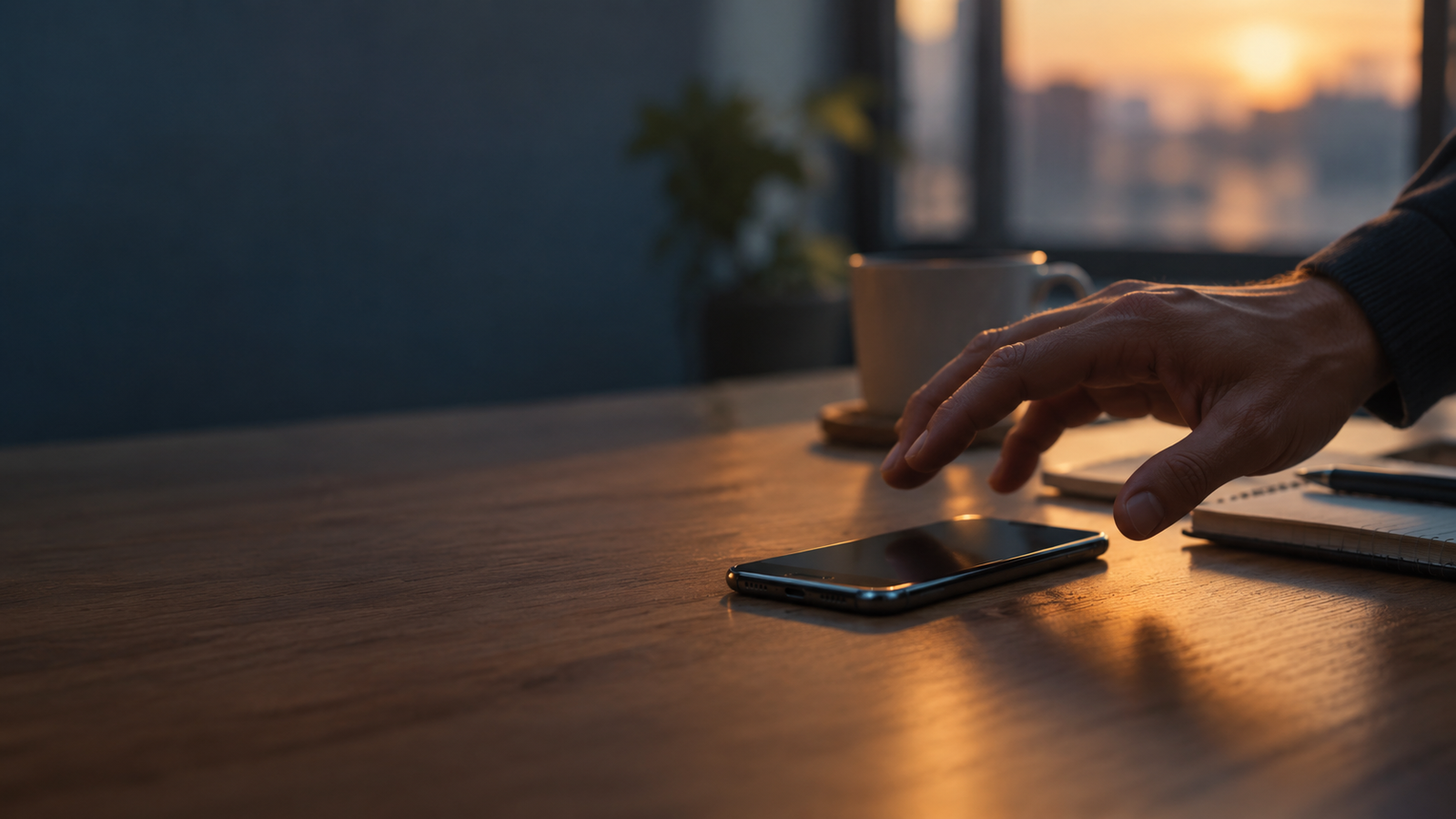
The Pattern I Found Behind Seven Hours of Screen Time
What happened when I stopped counting screen time and started noticing what came before it.
01- When Seven Hours Started to Feel Normal
Some days, I spent more than seven hours looking at a screen.
I knew that was a lot.
But what really bothered me was not just the number.
It had started to feel normal.
I would pick up the phone to check one message. Then a notification. Then a video. Then something else. A few minutes would pass. Then I would do it all again. And again. And again.
Often I wasn't looking for anything in particular. I was bored. I was tired. Or I had a small gap in the day. That was all.
Then a question came to me:
“Am I using the phone, or is the habit of picking it up using me?”
That was the first moment I began to see this differently.
02- When Matters More Than How Much
Before, I only watched the screen-time number. Seven hours. Six hours. Five hours. I thought that if I brought it down, the problem would be solved.
Then I started asking a different question:
“When do I pick up my phone?”
This turned out to be more useful. While waiting. When tired. When I needed to start a difficult task. When I didn't know what to do next. Or when I simply felt I deserved a break.
I noticed that certain situations came right before the moments I reached for the phone.
According to the view of habit put forward by Wood and Neal (2007), when we repeat an action in the same kind of context again and again, that context itself can become the cue that triggers the action.
Once I understood this, I began to see my phone use differently. Maybe I didn't have only a phone problem. Maybe I had a pattern problem.
03- Changing a Habit Is Not Just Resisting It
I used to think like this:
“If I don't touch the phone, I'm focused.”
But when I looked at the research, it was not that simple.
A study by Ward and colleagues (2017) suggested that the mere presence of a phone nearby may reduce some people's attention capacity. However, later replication attempts did not reliably find the same effect (for example, Ruiz Pardo & Minda, 2022). So this should be seen not as a proven fact, but as a hypothesis still under debate.
The research on notifications points in a clearer direction. In a study by Kushlev and colleagues (2016), people who turned notifications off reported fewer symptoms of inattention and hyperactivity. Fitz and colleagues (2019) found that receiving notifications in batches may improve well-being for some people.
All of this made me think about one simple point:
I don't have to fight a distraction every single time.
Sometimes, it is better to change the situation in which the distraction appears.
04- What Did I Change?
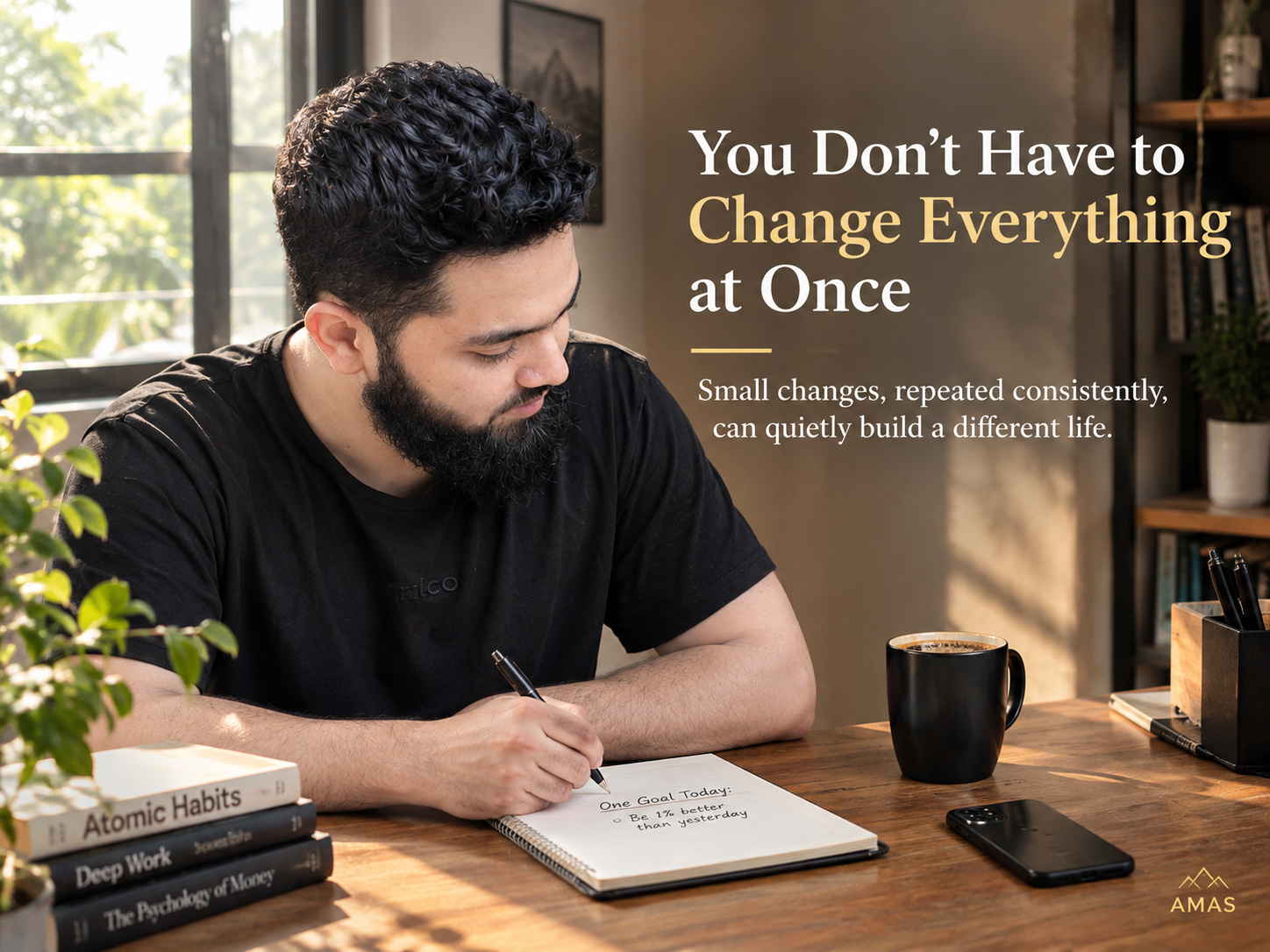
I didn't build a big productivity system. I didn't try to change everything in one day. I started with one small thing.
When I needed to concentrate, I stopped keeping the phone beside me and put it a little farther away. I turned off unnecessary notifications at certain times. Sometimes I gave myself a simple rule:
“During this time, I will not check my phone.”
I can't say this made me a disciplined person overnight. Even now, on some days I pick up the phone without thinking.
But there is one difference now.
I notice the pattern.
Once I started noticing, I got a small gap in which to change it. That is what feels important to me.
I never meant to give up technology entirely. My phone helps me with work, with communication, and with learning in many ways. My aim is not to avoid technology.
It is to stop every small trigger from deciding where my attention goes.
05- The Question I Ask Myself Now
This experience has changed, a little, the way I think about habits.
We usually ask:
“What do I want to achieve?”
But it may be useful to ask another question first:
“What do I actually repeat?”
Our goals may describe the person we want to become. But what we do over and over may give a more honest answer about the direction we are heading.
If we keep choosing learning, one pattern forms. If we keep choosing passive consumption, a different one forms. If we keep the small promises we make to ourselves, that builds a pattern too. If we break them, that becomes a pattern as well.
None of these small moments looks big, which is exactly why we overlook them. But over time, what we repeat becomes part of our lives.
I don't want to become someone who is always busy. I want to be someone who decides where my attention goes. Someone who doesn't run to a screen the moment boredom arrives. Someone who doesn't keep checking something else while doing important work. Someone who can learn without needing constant stimulation.
I'm not fully there yet. Some days go well. On other days I slide back into the old routine. But now I have a question:
“Is what I'm doing helping me become the person I want to be?”
This question serves me better than asking, “Was I productive today?”
Because our lives are not changed only by big decisions. The small decisions we keep making when no one is watching shape us as well.
The phone I pick up.
The page I read.
The task I avoid.
The promise I keep.
The distraction I resist.
The same choice I will make again tomorrow.
Now, when I catch myself picking up the phone for no reason, I try to pause for a few seconds and ask myself:
“What am I repeating?”
Because the answer may tell me not only what I am doing right now, but may also be a small sign of who I am becoming.
AMAS
Build quietly. Improve daily. Become a better man.


Join the Conversation
0 comments
No comments yet
Be the first person to comment.