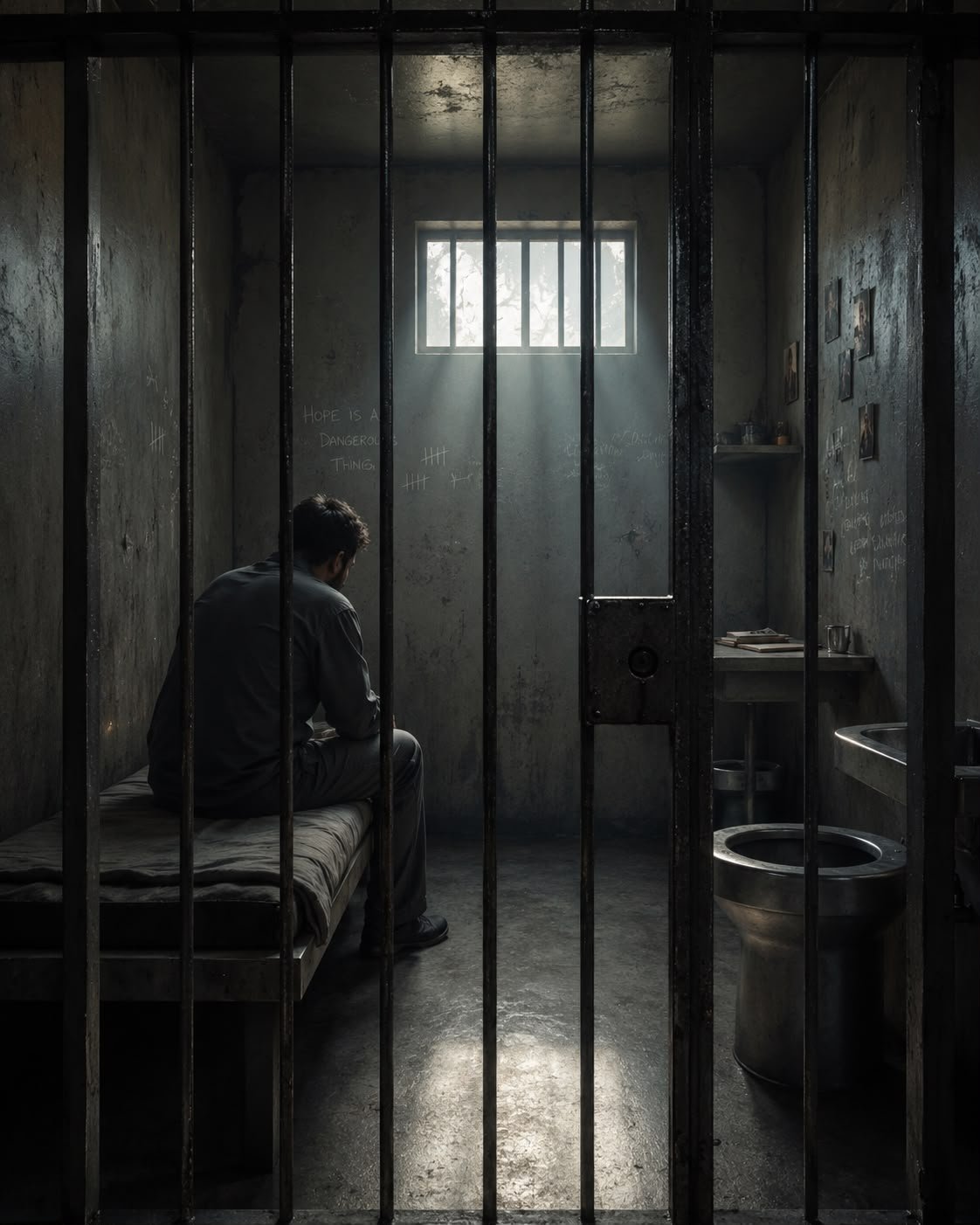
1. Why We Started Thinking of Prisons as Places of Torture
For most of human history, prisons weren't really designed to fix anyone. They were built to hold people until a punishment could be carried out, or to punish through suffering itself , hard labor, starvation rations, isolation, physical abuse. The idea was simple and old: make the experience painful enough, and people will be too afraid to offend again, or others will be too afraid to try.
This idea still shapes how many prisons work today. Overcrowding, harsh discipline, and a total loss of dignity aren't seen as side effects, in many systems, they're treated as the point. The thinking goes: prison is supposed to hurt.
But this approach has a long, well-documented track record, and it isn't a good one. Environments built purely around punishment and humiliation don't just fail to reform people , research on prison radicalization repeatedly shows they can incubate worse outcomes: deeper resentment toward the state, tighter bonds with other criminals, and in some well-studied cases, the birth of extremist networks that never existed before someone walked in the door. A 2023 study in the British Journal of Criminology found that when prisons shift from close, humane staff-prisoner relationships toward cold, distant management, violence and radicalization both rise. Punishment alone doesn't just fail to work , it can actively make things worse.
2. So What Is a Prison Actually For?
Strip away the assumptions, and a prison is meant to do three things: keep the public safe from someone who poses an active danger, hold a person accountable for real harm they caused, and , if it's working properly , return someone to society better equipped to live within it than when they arrived.
Most systems do the first two reasonably well. It's the third one that gets abandoned, often because it's harder, slower, and less emotionally satisfying than punishment. But a prison that only removes and punishes, without ever preparing someone to return, isn't solving the problem of crime -it's just delaying it, often in a worse form, until the day of release.
3. What's Actually Happening, and What Could Be Done
Right now, in many countries, including Sri Lanka, prisons are overcrowded, under-resourced, and built almost entirely around confinement rather than preparation for release. People often leave with no skills, no support, and a criminal record that closes most legitimate doors — while the doors that stayed open were often the ones connecting them to other criminals they met inside.
What could be done isn't a mystery. It's already been tried, measured, and proven to work elsewhere:
- Reduce overcrowding so basic dignity and safety are even possible.
- Separate people by risk and need, rather than housing first-time, low-level offenders alongside hardened, violent networks — exactly the kind of mixing that let a small group of extremists recruit and convert other prisoners in the al-Jafr and Camp Bucca cases studied in Black Flags.
- Invest in education and vocational training, not as a luxury, but as crime prevention.
- Build a real bridge to life after release — housing help, job placement, continued support — rather than releasing someone with nothing and being surprised when they reoffend.
4. The Evidence: Treating Prisoners Better Actually Works
This isn't a hopeful theory. It's a measured, repeated fact.
Norway rebuilt its prison system around this exact philosophy — normalization, education, dignity — starting in the 1990s. Before the reforms, Norway's recidivism rate (the rate at which released prisoners reoffend) was 60–70%. Today, it's around 20%, among the lowest in the world. Norwegian law explicitly bans torture and degrading treatment as punishment; the loss of freedom itself is considered the punishment, not suffering layered on top of it. Norway's most studied prison, Bastøy, is described as the most "livable" prison in the world — and also has the lowest reoffending rate and highest post-release employment rate in the country.
The mechanism isn't mysterious. Education and job training give former prisoners something to return to. Studies specifically tracking Norwegian prisoners found that people unemployed before prison saw a 40% increase in employment after release, when real vocational training was part of their sentence. A person with a skill, a job prospect, and some dignity intact has something to lose by reoffending. A person with nothing has nothing left to protect.
5. How Mandela Navigated Eighteen Years on Robben Island
Nelson Mandela spent 27 years in prison, 18 of them on Robben Island, in a cell roughly 8 feet by 7 feet, with a mat on the floor and a bucket for sanitation. The apartheid government deliberately isolated political prisoners like him, hoping isolation would break their ideas and their resolve.
Instead, Mandela and his fellow prisoners built what became known as "the University of Robben Island." Educated inmates taught the uneducated. They debated history, law, and politics late into the night. Mandela continued his own law studies even while facing a possible death sentence at trial. He later called prison "a tremendous education in the need for patience and perseverance."
Researchers who studied the psychology of Robben Island's prisoners identified a pattern they called the "HERO" mindset — Hope, Efficacy, Resilience, Optimism — reinforced by a strict internal code of conduct the prisoners set for themselves, and by a deliberate, sustained effort to treat even their guards as capable of change. Mandela is recorded saying exactly that: "We believed that all men, even prison service warders, were capable of change, and we did our utmost to try to sway them."
He walked out in 1990 not embittered, but oriented toward reconciliation — going on to work directly with the very government that imprisoned him, and to build South Africa's Truth and Reconciliation Commission on the principle of healing over revenge. Eighteen years of deliberate confinement, designed to crush him, instead produced one of history's most disciplined examples of patience turned into purpose.
6. The Quranic Wisdom: Yusuf (Alaihi Salam) in Prison
Long before Robben Island, the Quran had already told this story.
Yusuf (AS) was thrown into prison unjustly, for a crime he did not commit. He had every reason to arrive angry, and every excuse to let that anger define him. Instead, from the very first mention of him in that cell, the Quran shows him doing something specific: he serves the men around him. Two fellow prisoners come to trust him enough to bring him their dreams — not because he demanded their attention, but because his character had already earned it. He does not waste his confinement waiting to be freed; he uses it, calling the men around him toward truth even while he himself remains behind bars.
His release is delayed by years, forgotten by the very man he asked to remember him. And when he finally does walk out, he isn't given a token release — he's given real responsibility, entrusted with the storehouses of a nation, because his conduct inside had already proven who he was outside.
There is a lot of hikma in this worth sitting with slowly, rather than having it explained away. What made Yusuf (AS) trustworthy wasn't the absence of suffering. It was what suffering failed to take from him.
A Closing Thought
Between the torture chamber and the university, the difference was never the walls. Norway's data, Mandela's cell, and Yusuf's (AS) prison all point to the same quiet conclusion: what a person becomes inside confinement depends far more on what confinement is built to do to them, than on the fact of confinement itself. A system built to break people will usually succeed — and then be surprised when what it releases is more broken, not less. A system built to prepare people, even reluctantly, tends to produce exactly what it prepared them for.
The question was never really whether prisons should be harsh or soft. It's what kind of person we want walking back out the door.

Join the Conversation
0 comments
No comments yet
Be the first person to comment.