
YOU DON'T NEED MORE TIME. YOU NEED MORE FOCUS.
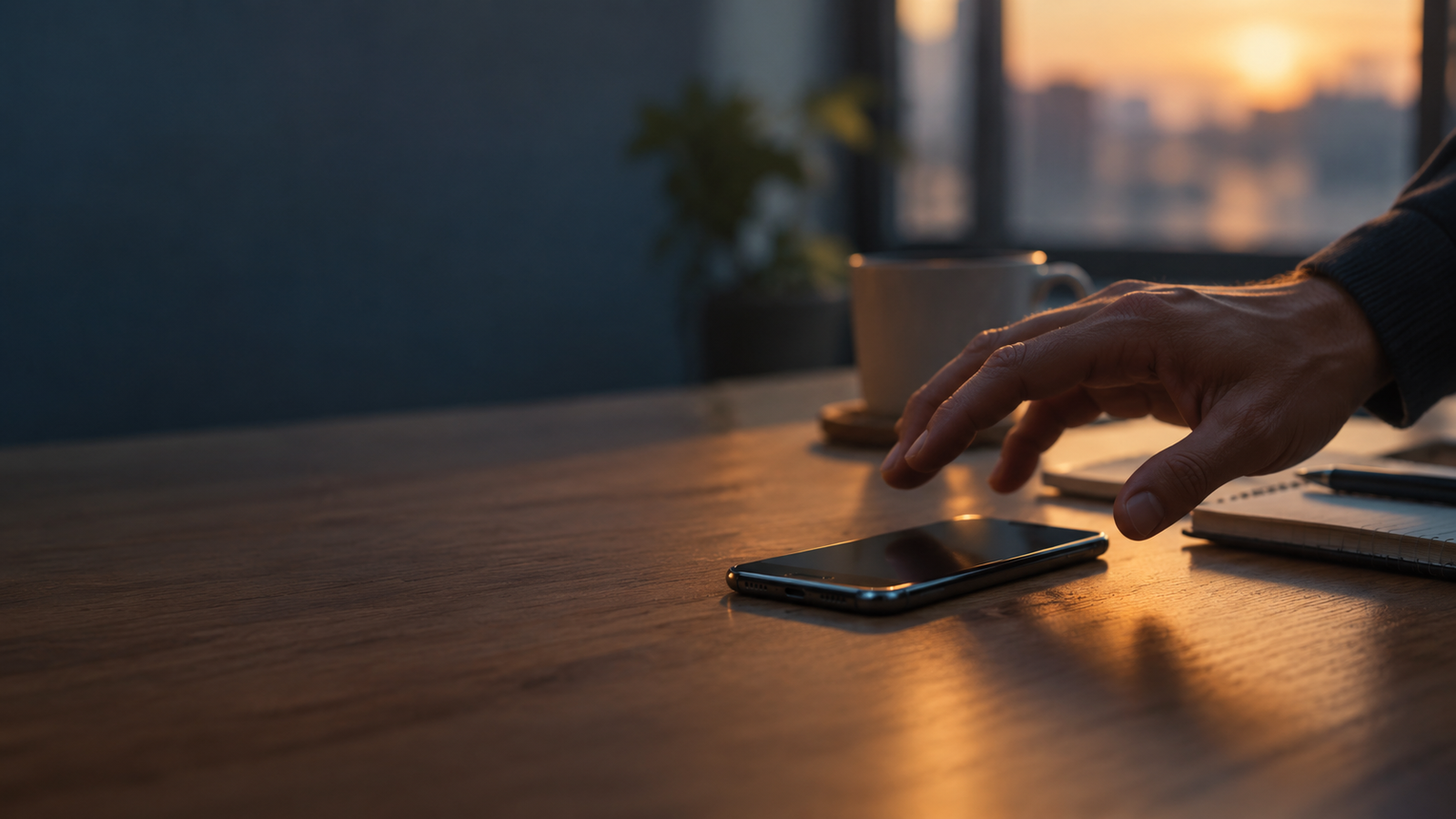
There were nights when I’d put down my phone, check the time, and wonder, "Where did the whole day go?"
I had been working. I’d been replying to messages. I was checking things, planning, and starting tasks. I felt tired—yet, somehow, I didn't feel like I was making progress.
For a long time, I believed the answer was simple:
"If only I had a little more time."
Things to build, skills to learn, tasks to finish, ideas to turn into reality—it was all swirling around in my head.
But when I started observing my days more closely, I realised an uncomfortable truth.
My time wasn't just vanishing all at once.
It was slipping away in tiny fragments.
A few minutes here. A notification there. A quick scroll. A reply. Another tab. Another distraction.
Viewed individually, none of these seemed like a big deal.
But put together, they completely consumed my day.
That’s when I asked myself a different question:
What if I don't need more time? What if I just need to handle the time I do have more intentionally?
The Time That Slips Away Unnoticed
We tend to think that "wasting time" means doing absolutely nothing. But it isn't always like that.
Sometimes, it involves continuously switching from one thing to another.
A notification.
A message.
A quick video.
Another tab.
Another conversation.
One small distraction follows another.
Each one takes only a few minutes. But when those minutes repeat, they quietly add up to hours.
That’s when I asked myself:
"Where is my attention actually going?"
This was a much harder question than "How can I find more time?"
Because I realized that it wasn't time I was losing.
It was my attention.
The Phone Isn't The Real Culprit
I don't want to blame my phone.
It helps me communicate, learn, work, and create.
The problem is reaching for it without thinking.
Waiting for something?
Phone.
Bored?
Phone.
Tired?
Phone.
Need a break?
Phone.
Sometimes, I pick up the phone before I’ve even consciously decided to do so.
This taught me something about habits:
Distraction doesn't always arrive loudly. When it becomes very familiar, we stop noticing it altogether.
Once a habit becomes automatic, simply knowing it exists isn't enough.
First, you need awareness.
Then, intention.
Then, practice.
I Started Choosing What Deserves My Attention
I am still learning.
I still get distracted. Some days I spend more time on my phone than I intend.
But I am becoming more conscious of it than I used to be. If something is important, I try to give it my full attention.
A task.
A conversation.
An idea.
An hour.
Not everything requires an immediate response.
Not every notification deserves my attention.
Not every opportunity deserves my energy.
Not every moment needs to be filled with something.
This last lesson was the hardest one for me to learn.
Sometimes, spending a moment doing nothing isn't a waste.
It creates space for reflection.
I Don't Want To Be Busy Just For The Sake Of Being Busy
There was a time when a packed schedule felt productive.
I used to think that juggling more things meant making more progress.
Now, I view progress differently.
It is better to complete a few meaningful tasks with genuine attention than to spend the whole day reacting to everything.
One honest, focused hour is better than five hours of constant interruptions.
Completing one important task is better than starting ten things and leaving them unfinished.
Being busy and making progress are not the same thing.
I am Learning To Find Quiet Moments
This doesn't mean disappearing from the world.
It doesn't mean giving up technology completely.
For me, it’s simple.
Sometimes, I put my phone aside.
Sometimes, I work without checking notifications.
Sometimes, I sit with an idea instead of immediately looking for an answer.
Sometimes, I go for a walk without documenting it.
Sometimes, I simply let my mind be quiet. In those quiet moments, I notice something:
I already know more than I realize—I just haven't given myself the time to think.
We consume so much information that, at times, we forget to listen to our own thoughts.
It feels like we don't need more input.
Sometimes, what we really need is more space.
My Focus Isn't Always Perfect.
I shouldn't delude myself into thinking I’ve fully mastered focus.
No.
There are still days where I lose hours.
There are moments when I pick up my phone without a real reason.
There are days when my plans go off track.
But I am learning not to let a single distracted moment turn into a completely distracted day.
If I lose focus, I can get it back.
If I waste an hour, I don't have to waste the next one too.
If things don't go according to plan today, there’s another chance tomorrow.
That is what discipline means to me.
It’s not about being perfect; it’s about bouncing back.
You Might Not Need More Time.
You might need fewer distractions.
You might need clear priorities.
You need to protect a small part of your day from constant noise.
You have to stop giving every notification, message, opinion, and temptation access to your mind.
So, before asking, "How can I get more time?"
Ask yourself, "What am I giving my time to?"
Then ask:
"Does it deserve it?"
Ultimately...
I’m still learning. But I know clearly what I want.
I don't want to fill my days with emptiness—I want to be present.
I don't want to give my attention to everything—I want to give it only to what matters.
When we look back one day, our life won't be defined by the sheer number of hours we lived, but by what we gave those hours to.
So, protect your attention. Make space for what matters. Put the noise aside for a while. Give yourself a chance to hear your own thoughts again.
AMAS
Build quietly. Focus deeply. Live purposefully.


Join the Conversation
0 comments
No comments yet
Be the first person to comment.