The Effects of Too Much Sugar on Our Health
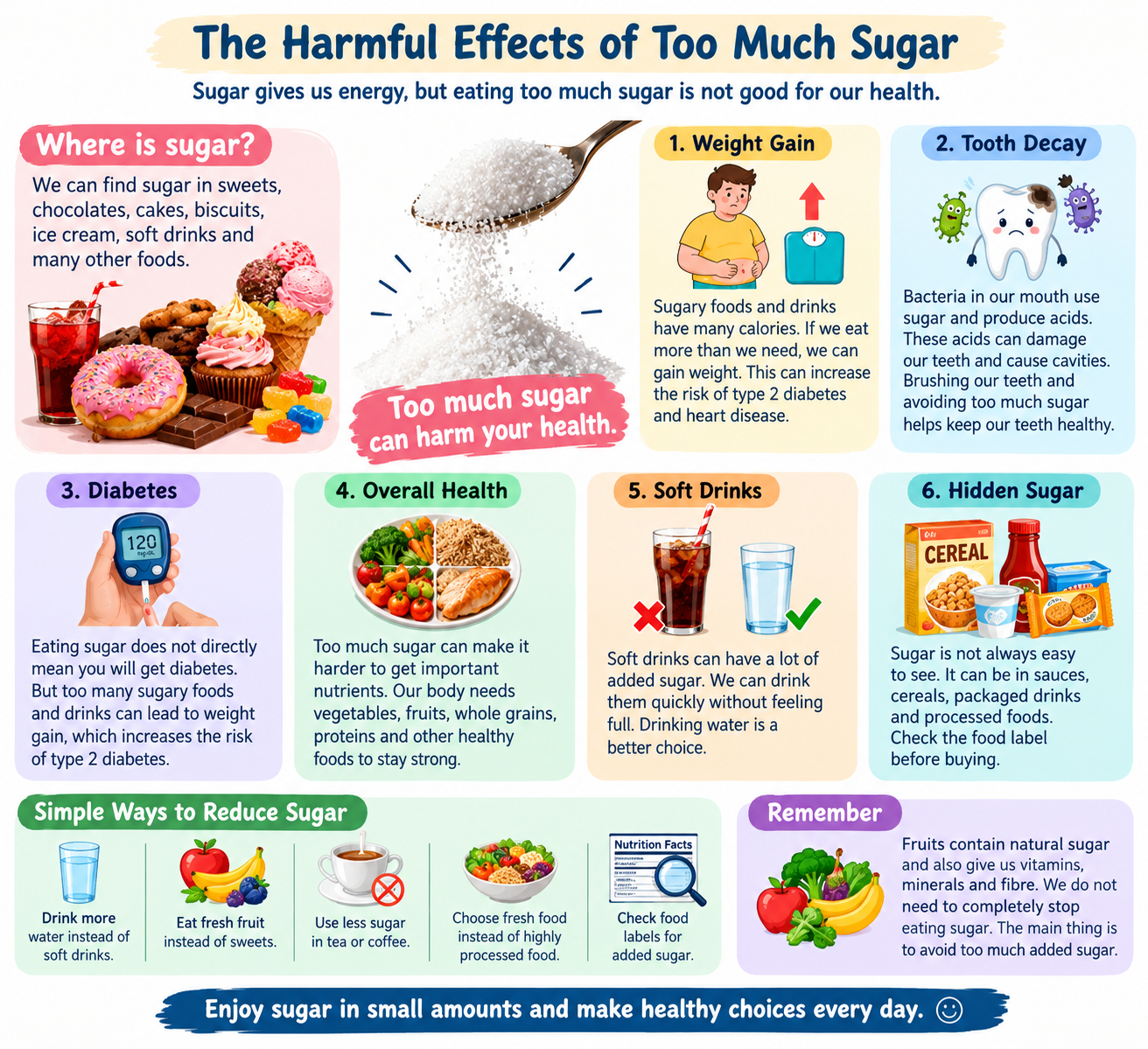
Sugar is a part of our everyday life. We can find it in sweets, chocolates, cakes, biscuits, ice cream, soft drinks and many other foods. Most people enjoy eating sweet food. Sugar can give us energy, but eating too much sugar can cause health problems.
The World Health Organization says that we should limit the amount of free sugar we eat every day (World Health Organization, 2015). This does not mean that we must stop eating all sugar. We should mainly try to reduce added sugar in our food and drinks.
One common problem with eating too much sugar is weight gain. Sugary foods and drinks can contain a lot of calories. If we eat more calories than our body needs, we may gain weight. Being overweight can increase the risk of health problems, including type 2 diabetes (National Institute of Diabetes and Digestive and Kidney Diseases, 2026).
Sugar can also be harmful to our teeth. When we eat sugary food, bacteria in our mouth use the sugar and produce acids. These acids can damage our teeth and cause cavities. Eating sugary foods many times a day can increase the chance of tooth decay (World Health Organization, 2015).
Another health concern is type 2 diabetes. Eating sugar does not mean that a person will definitely get diabetes. There are many causes of type 2 diabetes, including family history, lack of exercise and being overweight. However, eating too many sugary foods and drinks can contribute to weight gain and increase the risk of diabetes (National Institute of Diabetes and Digestive and Kidney Diseases, 2026).
Too much sugar can also affect our heart health. Eating a lot of added sugar can make it easier to take in too many calories. This can lead to weight gain and other health problems. The American Heart Association recommends limiting added sugar as part of a healthy diet (American Heart Association, 2026).
We should also be careful with soft drinks and sweetened drinks. These drinks can contain a large amount of sugar. We can drink them quickly without feeling full. Because of this, we may take in more sugar than we realize. Drinking water instead of sugary drinks is a simple way to reduce sugar.
Sometimes sugar is hidden in foods that do not taste very sweet. It can be found in some breakfast cereals, sauces, biscuits, packaged drinks and processed foods. Reading food labels can help us know how much sugar is in the food we buy.
There are some easy ways to eat less sugar. We can drink more water instead of soft drinks. We can eat fresh fruits instead of sweets. We can also use less sugar in tea and coffee. Eating more vegetables, fruits, whole grains and other healthy foods can help us have a balanced diet.
We do not have to completely stop eating sweet foods. Having a sweet food sometimes is okay. The important thing is not to eat too much sugar every day.
Sugar and Brain Health
Some people say that sugar directly causes dementia, but this is not correct. Dementia has many possible causes and risk factors. These can include age, genetics and other health conditions.
Therefore, we should be careful about making simple claims that sugar directly causes dementia.
Sugar and Our Teeth
Too much sugar can also be bad for our teeth. Bacteria in our mouth use sugar and produce acids. These acids can damage our teeth and cause cavities. Eating sugary foods often can increase the risk of tooth decay (World Health Organization, 2015).
This is why brushing our teeth regularly and reducing sugary foods are important.
In conclusion, we do not need to stop eating sugar completely. We just need to eat less added sugar.
Too much sugar can cause tooth problems and weight gain. It can also increase the risk of some health problems. Saying that sugar directly causes dementia is not correct.
We can make better choices by drinking more water, eating fresh food, having fewer sugary drinks, and checking food labels.
A healthy diet does not mean never eating sugar. It means eating less sugar and choosing healthy food most of the time.
References
American Heart Association (2026) 2026 dietary guidance to improve cardiovascular health. Available at: American Heart Association� (Accessed: 20 September 2026).
National Institute of Diabetes and Digestive and Kidney Diseases (2026) Risk factors for type 2 diabetes. Available at: NIDDK� (Accessed: 20 September 2026).
World Health Organization (2015) Guideline: sugars intake for adults and children. Geneva: World Health Organization. Available at: World Health Organization� (Accessed: 20 September 2026).


Join the Conversation
0 comments
No comments yet
Be the first person to comment.